

These chocolate crinkle cookies are the cookie that disappears first from every Christmas tray. Dark, fudgy and brownie-like inside, each one wears a snowy coat of powdered sugar that splits open in the oven into deep, dramatic cracks. They look like they came from a bakery window, but the dough comes together in one bowl with pantry staples and a bar of baking chocolate.
The secret is patience, not skill. A three-hour chill firms the soft dough so it rolls neatly and bakes thick instead of flat, and a double roll — granulated sugar first, then a heavy coat of powdered sugar — keeps the white coating bright against the dark chocolate. Make a batch for a cookie exchange, a holiday party or a quiet evening with a mug of hot chocolate.
Prep: 20 min · Cook: 12 min · Total: 3 hrs 35 min (incl. 3 hrs chilling) · Makes: 24 cookies

Image credit: Crayons and Cravings / crayonsandcravings.com
Why This Chocolate Crinkle Cookies Recipe Works
Most crinkle cookies lean on cocoa powder alone, but this one starts with real melted chocolate as well. The unsweetened chocolate gives the dough a deep, almost brownie-like richness that cocoa on its own cannot quite reach, while the cocoa powder darkens the colour so the cracks show up beautifully against the white sugar. Brown sugar keeps the centres soft and moist for days, and butter adds a richness that oil-based versions miss.
The method is built around the crackle. Chilling the dough for three hours means the balls hold their shape in the oven and spread slowly, so the sugar shell tears into a few wide fissures instead of a web of fine lines. Rolling each ball in granulated sugar first creates a dry barrier that stops the powdered sugar from melting into the damp dough, which is why the coating stays bright white instead of turning grey. Nothing here is fussy — it is just the right order of simple steps.
Ingredients
You need nothing exotic for these cookies. The one ingredient worth seeking out is a bar of unsweetened baking chocolate — chocolate chips are sweetened and will make the cookies too sweet and less chocolatey. Everything else is standard baking-cupboard fare.
- 4 oz (115 g) unsweetened chocolate, roughly chopped
- ½ cup (115 g) unsalted butter
- 1¼ cups (250 g) light brown sugar, packed
- 3 large eggs, at room temperature
- 2 teaspoons pure vanilla extract
- 1¾ cups (220 g) all-purpose flour, spooned and levelled
- ½ cup (45 g) unsweetened cocoa powder
- 1 teaspoon baking powder
- ¼ teaspoon baking soda
- ½ teaspoon salt
- ⅓ cup (65 g) granulated sugar, for rolling
- 1 cup (120 g) confectioners’ sugar, for rolling
Room-temperature eggs matter here: cold eggs will not blend smoothly into the warm chocolate mixture and can make the dough lumpy. If you forgot to take them out, set them in a bowl of warm water for ten minutes while the chocolate melts.

Image credit: Crayons and Cravings / crayonsandcravings.com
How to Make Chocolate Crinkle Cookies
The hands-on work takes about twenty minutes. The rest is chilling time, so start the dough in the morning or the night before and bake whenever suits you.
- Melt the chocolate and butter. Put the chopped chocolate and the butter in a microwave-safe bowl and heat at half power for one minute. Stir well, then heat in 30-second bursts, stirring after each one, until the mixture is smooth and glossy. Half power keeps the chocolate from scorching. Set it aside for about five minutes — it should feel warm, not hot, before the eggs go in.
- Whisk the dry ingredients. While the chocolate cools, whisk the flour, cocoa powder, baking powder, baking soda and salt together in a medium bowl until no cocoa lumps remain. Sifting the cocoa through a small sieve first saves you chasing lumps later.
- Beat the chocolate and sugar. In a large bowl, beat the melted chocolate mixture and the brown sugar with a hand or stand mixer until combined and slightly lighter in colour. Add the eggs one at a time, beating well after each, then beat in the vanilla. The mixture should look thick, dark and glossy, like brownie batter.

Image credit: Sally’s Baking Addiction / sallysbakingaddiction.com
- Add the dry ingredients. Turn the mixer to low and add the flour mixture a little at a time, mixing just until no dry streaks remain. Do not overmix — a few seconds past combined is enough. The dough will be soft and sticky, much softer than ordinary cookie dough. That is exactly right.
- Chill for three hours. Cover the bowl tightly and refrigerate for at least three hours, or overnight. The dough firms up as it chills, which makes it possible to roll and helps the cookies bake thick. If you chilled it overnight, let it sit on the counter for fifteen to twenty minutes before scooping so it softens just enough to handle.
- Roll in two sugars. Heat the oven to 350°F (177°C) and line two baking sheets with parchment paper. Put the granulated sugar in one shallow dish and the confectioners’ sugar in another. Scoop the dough with a medium cookie scoop, about one and a half tablespoons per cookie, and loosely shape each scoop into a ball without packing it tightly. Roll each ball lightly in granulated sugar, then generously in confectioners’ sugar until it is completely white.

Image credit: Crayons and Cravings / crayonsandcravings.com
- Bake until cracked. Set the coated balls two inches apart on the prepared sheets. Bake for 11 to 12 minutes, until the cookies have puffed up and the tops are deeply cracked and the edges look set. The centres will still look soft and slightly underdone — pull them anyway, because they firm up as they cool. If the cookies have not started spreading by minute nine, take the sheet out and tap it firmly on the counter two or three times, then return it to the oven. Cool on the baking sheets for five minutes, then move to a wire rack.

Image credit: Rose Bakes / rosebakes.com
Variations
- Peppermint crinkles: Add ½ teaspoon of peppermint extract along with the vanilla, and sprinkle a few crushed candy canes over the cookies while they are still warm. The mint cuts through the richness beautifully.
- Espresso crinkles: Stir 1 teaspoon of instant espresso powder into the dry ingredients. It does not make the cookies taste like coffee — it just deepens the chocolate flavour.
- Orange crinkles: Add the finely grated zest of one orange to the chocolate and sugar mixture. Chocolate and orange are a classic Christmas pairing, and the zest perfumes the whole batch.
- Double chocolate chip crinkles: Fold ¾ cup of mini semi-sweet chocolate chips into the dough with the last of the flour. The chips melt into little pockets of chocolate in the finished cookies.
- Gluten-free crinkles: Swap the all-purpose flour for the same weight of a good 1-to-1 gluten-free baking flour. The dough may need an extra thirty minutes in the fridge to firm up.
Toppings and Serving Ideas
These cookies need very little dressing up — the crackled tops do the work. Serve them warm from the oven with a glass of cold milk, or stack them on a Christmas cookie tray next to lighter cookies like snowballs and shortbread so the dark-and-white contrast stands out. They are sturdy enough to travel, which makes them ideal for a cookie exchange or a holiday gift tin lined with parchment.
For a dessert, sandwich a scoop of vanilla ice cream between two cookies and freeze for twenty minutes, or crumble a cookie over hot chocolate instead of a marshmallow. A small dusting of extra confectioners’ sugar just before serving freshens the snowy look if the cookies have been sitting out for a while.
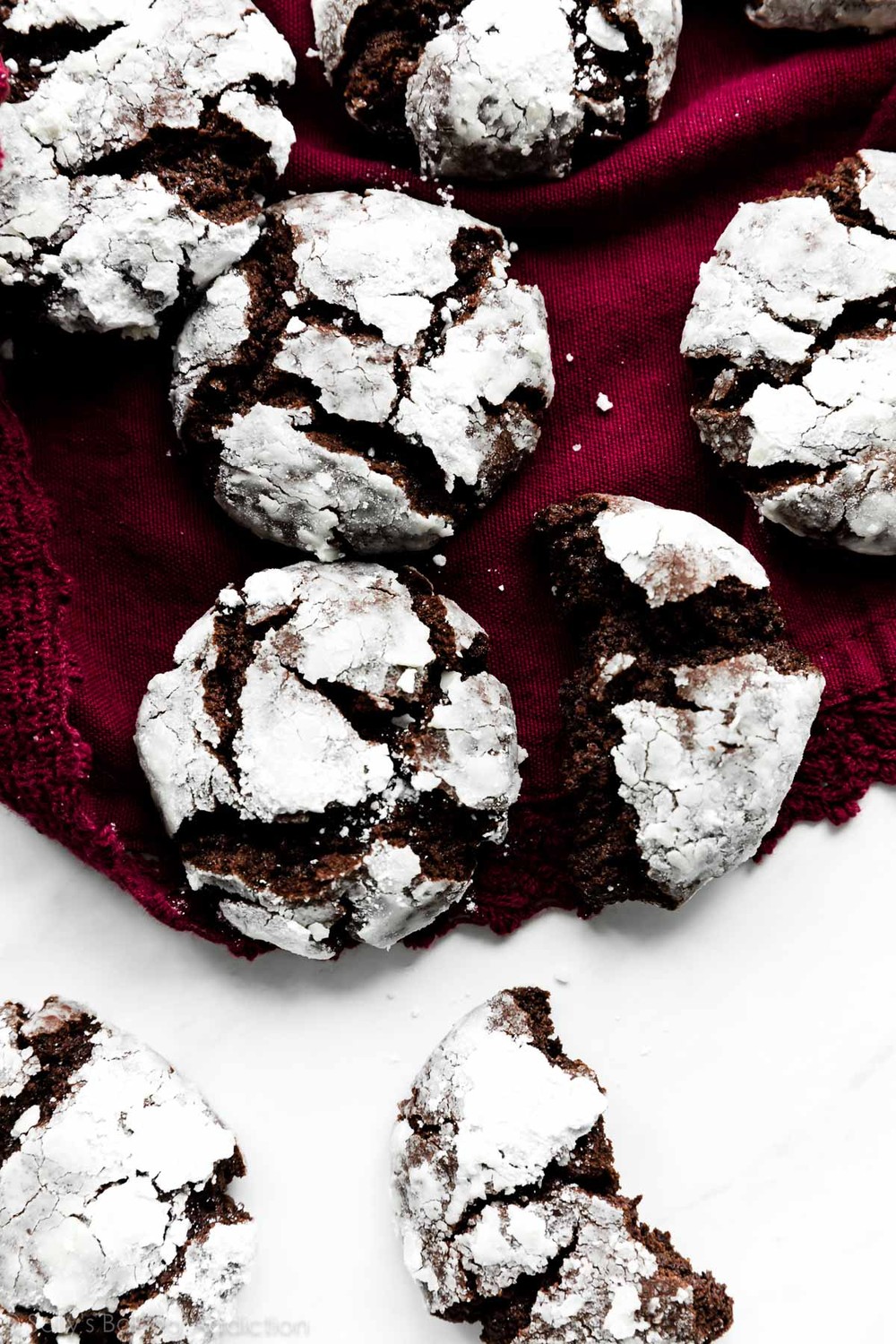
Image credit: Sally’s Baking Addiction / sallysbakingaddiction.com
Storage and Freezing
Keep the baked cookies in an airtight container at room temperature for up to five days. Layer them between sheets of parchment paper so the sugar coating does not rub off, and do not store them with crisp cookies — the moisture from the crinkles will soften anything else in the tin.
The dough freezes beautifully, which makes this a good make-ahead recipe. Roll the chilled dough into balls, freeze them uncoated on a tray until solid, then transfer to a zipped bag for up to three months. When you are ready to bake, thaw the balls on the counter for thirty minutes, roll them in the two sugars and bake as directed. Baked cookies also freeze well for up to three months in single layers between parchment; thaw at room temperature and dust with a little fresh confectioners’ sugar before serving.

Image credit: Rose Bakes / rosebakes.com
Frequently Asked Questions
Why didn’t my cookies crack? The most common cause is dough that was too warm or balls that were packed too tightly. Chill the full three hours, shape the balls loosely, and make sure they are big enough — about one and a half tablespoons each. Small, tight balls stay thick and barely spread, so the sugar shell never tears.
Can I skip the chilling step? No — the chill is what makes this recipe work. The dough is as soft as brownie batter when mixed and impossible to roll. Chilling firms it so the balls hold their shape, and cold dough spreads slowly in the oven, which is what creates the deep cracks. If you are short on time, an hour in the freezer is a workable shortcut, though the cracks will be finer.
Why did my powdered sugar melt or turn grey? Powdered sugar dissolves on contact with damp dough. Rolling the balls in granulated sugar first solves this: the coarse crystals take the moisture and leave a dry surface for the powdered sugar to cling to. A heavy coat helps too — roll until the ball is completely white, with no dark dough showing through.
Tips for the Best Chocolate Crinkle Cookies
Chill the full three hours: this is the single most important step in the recipe, and shortening it is the most common reason crinkle cookies come out flat and uncracked. Cold dough holds its shape, spreads slowly and tears the sugar coating into wide, dramatic fissures, while warm dough slumps into a thin disc before the shell has a chance to split. Roll generously in both sugars: a light dusting of powdered sugar melts in the oven and leaves the cracks looking grey, so roll each ball in granulated sugar first, then bury it in confectioners’ sugar until it is thickly white all over — you should not be able to see any dark dough through the coating. Pull them early: the cookies are done when the edges are set and the tops are cracked, even though the centres still look soft and underdone, because they keep cooking on the hot tray and set into a fudgy middle as they cool, while an extra two minutes in the oven dries them out completely. Bake on dry days if you can: humidity soaks into the powdered sugar and melts the coating, so on a damp day roll the balls extra thickly and bake one sheet at a time so the coated balls are not sitting out absorbing moisture while they wait.