

This christmas beef tenderloin recipe turns the most tender cut of beef into the centrepiece your holiday table deserves — a garlic-herb butter crust, a rosy medium-rare centre, and a creamy horseradish sauce on the side. It looks like something from a fine restaurant, but the method is wonderfully simple: a hot sear, a short roast, and a proper rest.
Unlike prime rib, which needs hours in the oven, a whole tenderloin roasts in under half an hour, so you can spend Christmas Day with your guests instead of watching the oven. This recipe walks you through every step, from trimming and tying the roast to carving perfect medallions at the table.
Prep: 20 mins · Cook: 35 mins · Total: 3 hrs 10 mins (incl. 2 hrs tempering + 15 mins resting) · Serves: 8
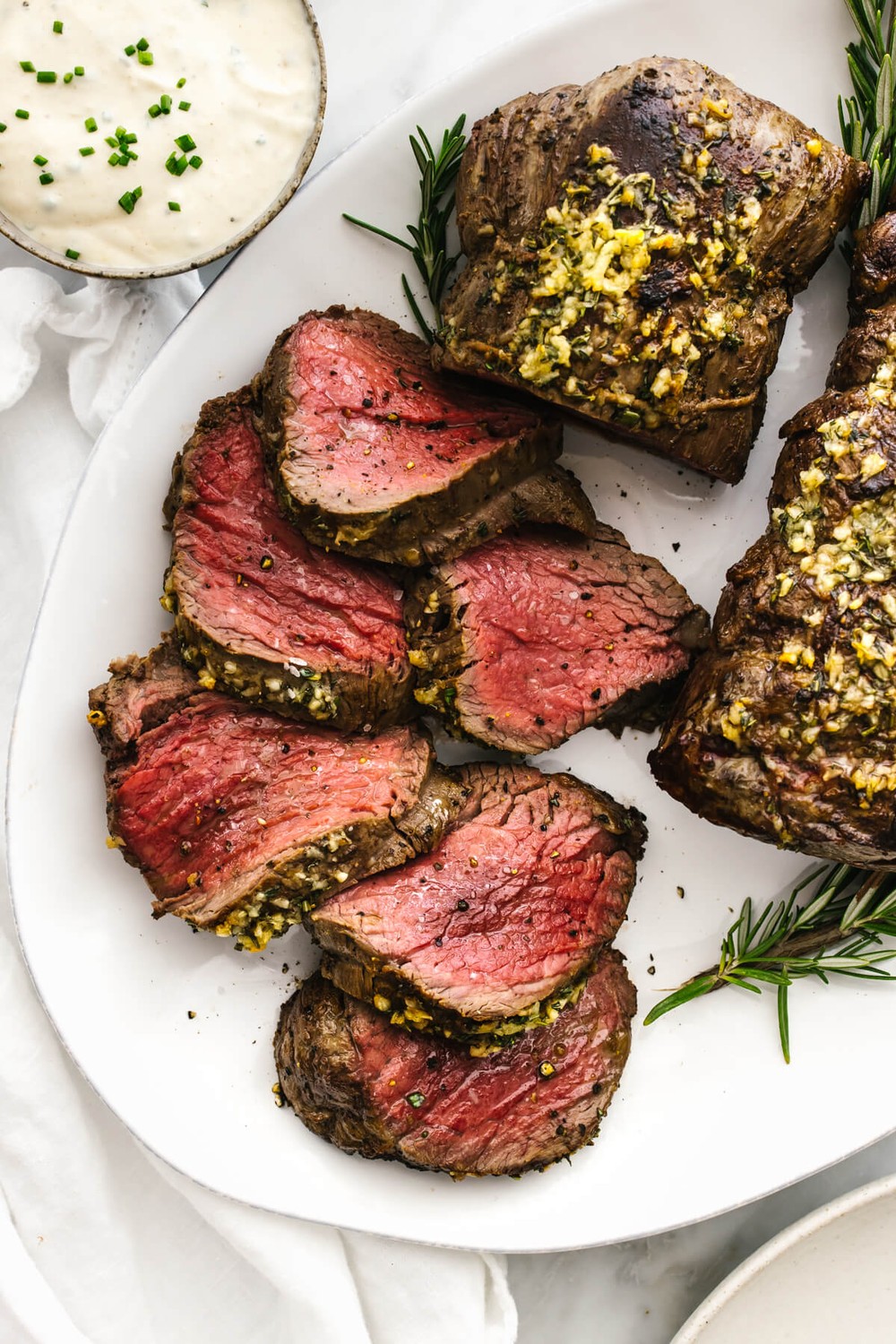
Why This Christmas Beef Tenderloin Works
Beef tenderloin is the leanest, most tender cut on the whole animal — the same muscle that filet mignon steaks are cut from — so it needs very little help to taste luxurious. A whole roast has no bones and almost no fat to trim away, which makes it one of the easiest holiday mains to carve: one sharp knife, straight slices, and every guest gets an identical medallion.
This recipe uses a sear-first method. Browning the roast in a screaming-hot cast-iron skillet builds a deep golden crust and the rich, savoury flavour that oven heat alone can never create. The garlic-herb butter then melts over the top as the roast finishes in a hot oven, basting the lean meat and keeping it juicy. Because the tenderloin is so lean, the only real risk is overcooking — and that is exactly what the thermometer takes care of. Cook to temperature, not to time, and this roast is practically foolproof.
Ingredients
You only need a handful of ingredients, so make each one count: fresh herbs, real butter, and a good piece of beef from a butcher you trust.

- 1 whole beef tenderloin (4 lb), trimmed and tied
- 2 teaspoons kosher salt
- 1 teaspoon freshly ground black pepper
- 1 tablespoon avocado oil (or olive oil), for searing
- 5 tablespoons unsalted butter, softened
- 5 garlic cloves, minced
- 1 tablespoon fresh rosemary, finely chopped
- 2 teaspoons fresh thyme leaves
- 1 teaspoon Dijon mustard
- Creamy horseradish sauce, to serve (½ cup sour cream, 3 tablespoons prepared horseradish, 1 teaspoon Dijon mustard, 1 teaspoon lemon juice, salt and pepper to taste)
Ask your butcher to trim the silver skin and tie the roast — most will do it free of charge, and it saves you the fiddliest job of the day. If you buy a whole untrimmed tenderloin, look for one that is evenly thick; the thin tail end gets tucked under and tied so the roast cooks at the same rate from end to end. Fresh rosemary and thyme are worth seeking out here: dried herbs cannot match their fragrance, and this is a roast where every flavour note shows. The spoonful of Dijon in the herb butter is the quiet secret of this recipe — it adds a gentle tang that cuts through the richness of the butter and beef.
How to Make Christmas Beef Tenderloin
Seven steps stand between you and the table. Read them through once before you start, and have your thermometer and twine ready before the skillet gets hot.
1. Temper and tie the roast. Take the tenderloin out of the fridge 1 to 2 hours before cooking so it loses its chill and roasts evenly. If the tail end is thin, fold it underneath to make the roast a uniform thickness, then tie it with kitchen twine every 2 inches. If your skillet is on the small side, cut the roast in half crosswise — two shorter roasts sear more easily and let you pull one out early if it cooks faster.

2. Make the garlic herb butter. Mash the softened butter with the minced garlic, rosemary, thyme and Dijon mustard in a small bowl until it is smooth and flecked green. Set it aside at room temperature so it spreads easily; you can make it up to two days ahead and keep it in the fridge, just let it soften before you use it.

3. Season and heat the oven. Preheat the oven to 425°F (220°C). Pat the tenderloin completely dry with paper towels — a dry surface is what browns — then season it generously on all sides with the salt and pepper, including the ends.
4. Sear in a cast-iron skillet. Heat the oil in a large cast-iron skillet over medium-high heat until it shimmers. Lay the roast in the pan and sear it for about 3 minutes per side, turning with tongs, until every side is deeply browned — around 10 minutes in total. Do not crowd the pan or move the meat while it sears; leave it alone and let the crust form.

5. Butter and roast. Take the skillet off the heat and spread the herb butter thickly over the top and sides of the roast. Slide the whole pan into the oven and roast for 18 to 25 minutes, until a thermometer in the thickest part reads 120°F for medium-rare. Begin checking at 18 minutes — tenderloin goes from perfect to overdone quickly. For rare, pull it at 115°F; for medium, pull it at 130°F.

6. Rest the roast. Transfer the tenderloin to a cutting board and tent it loosely with foil. Let it rest for a full 15 minutes. The temperature will climb about 10°F as it rests, landing at a rosy 130°F, and the juices will settle back into the meat instead of running out onto the board. This is the step that makes the difference between a juicy roast and a dry one — do not skip it.
7. Carve and serve. Snip away the twine and slice the roast against the grain into 1-inch medallions with a long, sharp knife, wiping the blade clean between cuts. Arrange the slices overlapping on a warm platter, spoon over any juices from the board and the pan, and serve with the creamy horseradish sauce on the side.
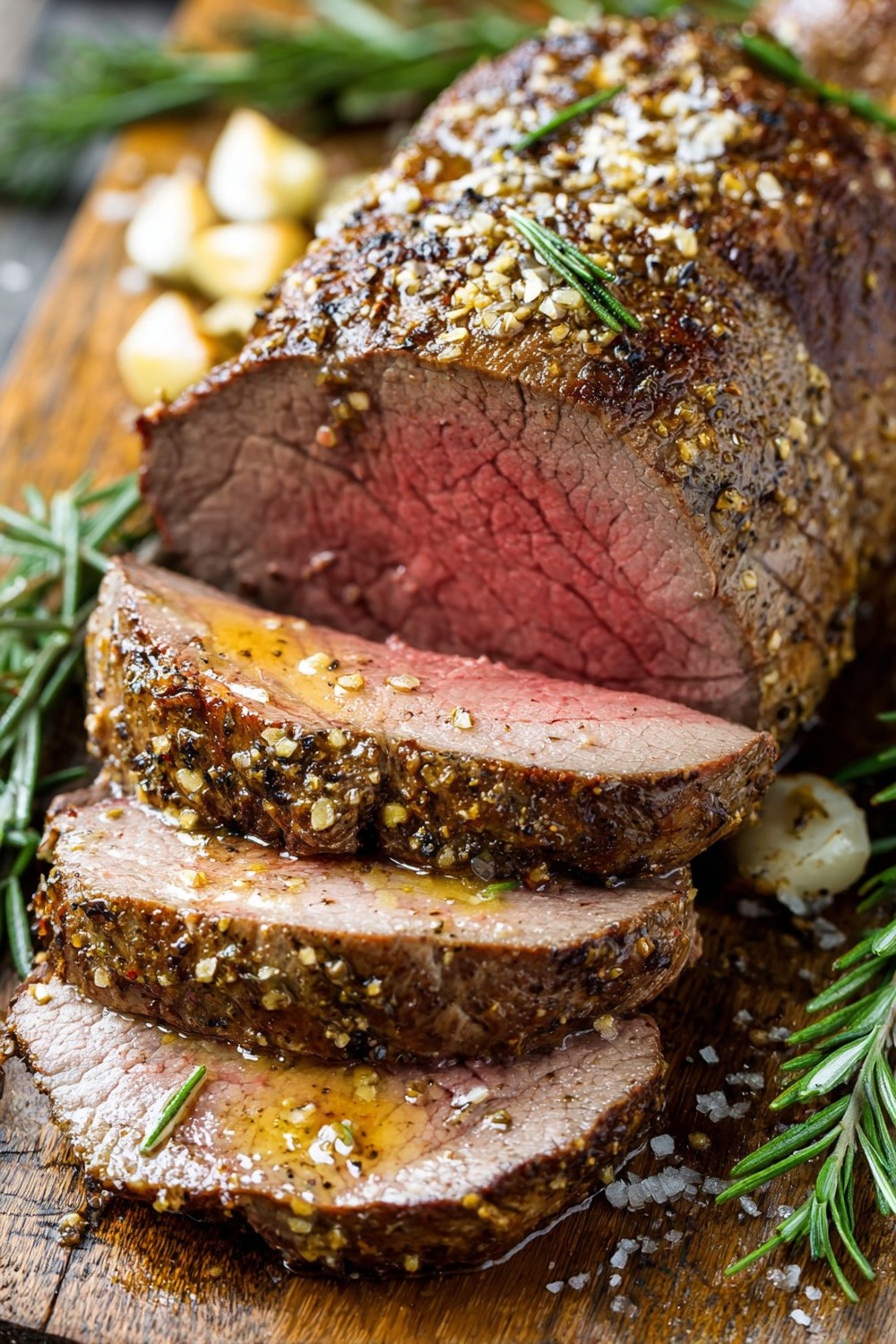
Christmas Beef Tenderloin Variations
Reverse sear: If you prefer an edge-to-edge pink centre with no grey band at all, roast the seasoned tenderloin low and slow at 250°F until it reaches 115°F inside (about 60 to 75 minutes), then sear it in a 500°F oven for 6 to 8 minutes until deeply browned. It takes longer, but the even colour is spectacular.
Bacon-wrapped: Lay thin slices of bacon over the top of the roast, overlapping slightly, and secure them with twine before searing. The bacon bastes the lean meat as it renders and adds a smoky, salty note — crisp the bacon under the broiler for a minute or two at the end if it needs more colour.
Peppercorn crust: Swap the herb butter for a crust of coarsely crushed black, green and pink peppercorns pressed into the surface before searing, then serve with a brandy cream sauce. The peppery heat is a classic steakhouse pairing and a lovely change from rosemary.
Smoked tenderloin: If you own a smoker or pellet grill, smoke the tied roast at 225°F until it reaches 122°F inside (about 90 minutes), then sear it in a buttered cast-iron skillet for 2 to 3 minutes per side. The gentle smoke is wonderful with the horseradish sauce.
What to Serve with Christmas Beef Tenderloin
The horseradish sauce in the ingredients list is the classic partner — cool, creamy and sharp against the rich beef — but a red wine pan sauce is just as good: deglaze the hot skillet with a splash of red wine and beef broth, scrape up the browned bits, and simmer until it coats a spoon. A mushroom cream sauce or a simple chimichurri works beautifully too, and any of them can be made while the roast rests.
For sides, think classic Christmas: buttery mashed potatoes to catch the pan juices, honey-glazed carrots, roasted Brussels sprouts, garlicky green beans, or a crisp green salad to cut through the richness. Warm dinner rolls are almost mandatory for mopping up the plate. To drink, a full-bodied red such as Cabernet Sauvignon or Merlot is the traditional match, though a sparkling apple cider keeps the table festive for everyone.
How to Store and Freeze Christmas Beef Tenderloin
Leftover tenderloin is a gift — it is just as good the next day, sliced cold for sandwiches or gently reheated. Store sliced leftovers in an airtight container in the fridge for up to 4 days, with any pan juices poured over the top to keep the meat moist.
For longer storage, freeze slices in a single layer on a baking sheet until firm, then transfer them to freezer bags with the air pressed out; they keep for up to 3 months. Thaw overnight in the fridge. To reheat, warm the slices gently in a 300°F oven for 8 to 10 minutes, or flash them for 30 seconds per side in a buttered skillet — either way, stop as soon as they are warm, because a second full cook will dry out this lean cut.
You can also get ahead for Christmas Day: the herb butter and horseradish sauce both keep in the fridge for up to 2 days, and the tenderloin can be trimmed, tied and seasoned a day ahead, covered, and brought back to room temperature before cooking.
Christmas Beef Tenderloin Questions
How long should I cook beef tenderloin per pound?
As a rough guide, plan on about 5 to 6 minutes per pound in a 425°F oven after searing — so a 4-pound roast needs roughly 18 to 25 minutes. But treat that only as a planning estimate: thickness, starting temperature and your oven all change the timing, so always finish by internal temperature with a thermometer rather than by the clock.
What temperature is medium-rare for beef tenderloin?
Pull the roast from the oven at 120°F and let it rest for 15 minutes; carryover cooking will bring it to about 130°F, which is a warm, rosy medium-rare. If you prefer rare, pull at 115°F, and for medium, pull at 130°F. Avoid cooking past medium — this lean cut dries out quickly once the pink disappears.
Can I prepare christmas beef tenderloin ahead of time?
Yes — most of the work can be done the day before. Trim and tie the roast, make the herb butter, and stir together the horseradish sauce, then refrigerate everything and bring the meat to room temperature 1 to 2 hours before cooking. You can even roast the tenderloin a day ahead, chill it whole, then slice it cold and warm the slices gently in a low oven — handy when oven space is tight on Christmas Day.
Tips for the Best Christmas Beef Tenderloin
Trust the thermometer, not the clock: a tenderloin is too expensive to guess at, so use an instant-read thermometer and check the thickest part of the roast, testing in two spots if the roast is unevenly thick, and start checking a few minutes before you expect it to be done — ovens vary, roasts vary, and five degrees is the difference between rosy and overdone. Dry the surface before searing: pat every side with paper towels until no moisture remains, because a wet roast steams instead of browning and you will never get that deep golden crust. Pull it early: take the roast out 10°F below your target temperature and let carryover cooking finish the job during the rest, remembering that an underdone slice can always be flashed in a hot skillet while an overdone roast cannot be saved. Rest it fully: give the roast the whole 15 minutes under loose foil before you cut into it, warm your serving platter first so the medallions stay hot on their way to the table, and slice with a long sharp knife against the grain so every medallion is tender and the juices stay in the meat where they belong.